

Transcript
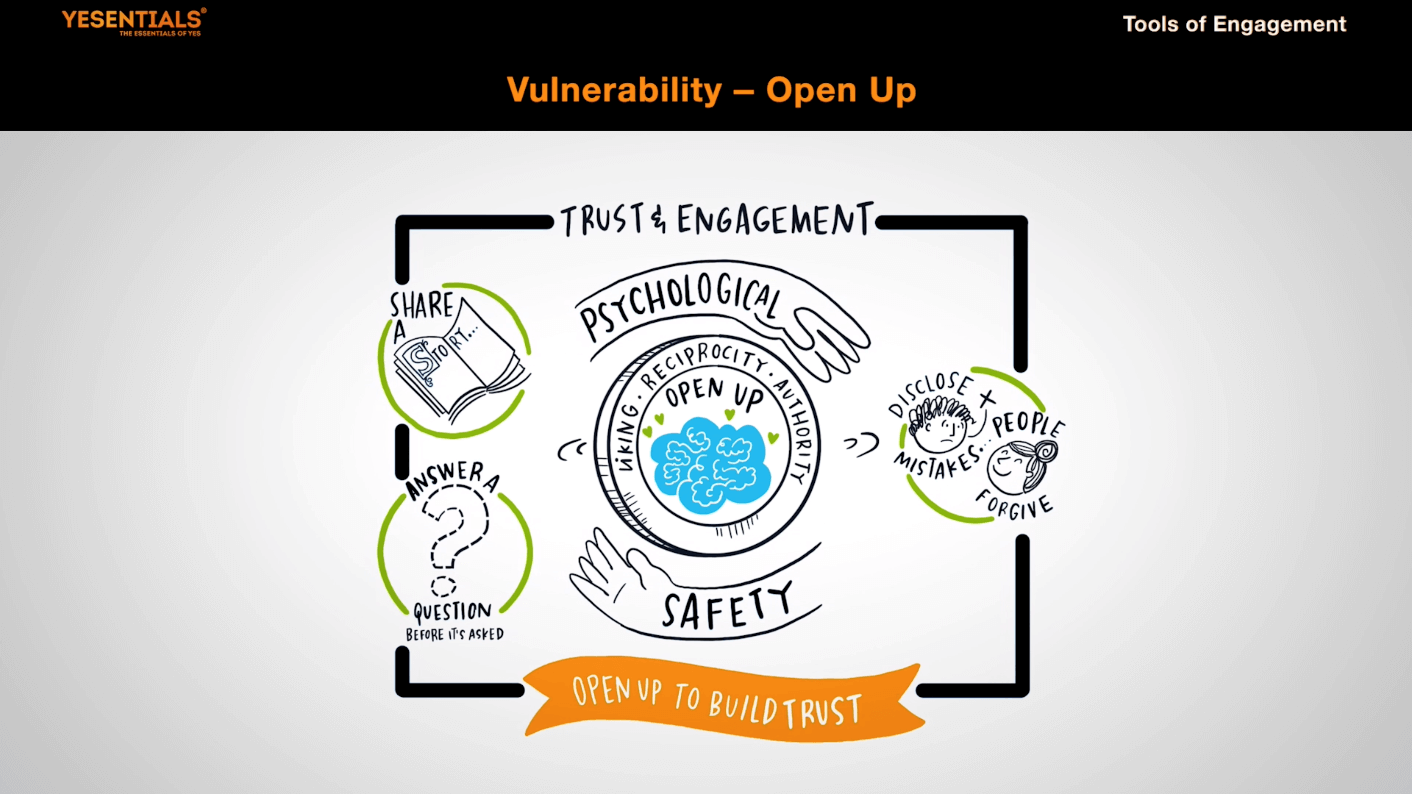
Vulnerability is one of the fastest shortcuts to building trust and engagement AND to creating an environment of psychological safety.
From a brain science perspective, vulnerability is a two-sided coin. Even the Latin root has two meanings… to open up, and to wound. It’s no wonder people don’t want to open up…it’s risky. The brain avoids risk. If we don’t feel safe our brain releases two survival chemicals that can be bad for us, cortisol and adrenaline – the root of stress, anxiety and FIGHT OR FLIGHT.
On the flip side, research ALSO shows that when someone shows vulnerability to us it releases in us the positive chemicals dopamine, oxytocin and serotonin – we are better at helping than we are at asking for help. By opening up we trigger in others the three cognitive biases liking, reciprocity and authority, allowing them to find something in common to like about us. We’re making deposits in each other’s trust account.
The reason we don’t share is because we’re uncertain of the outcome. BUT we can control how we respond when people open up to us and are vulnerable with us. By being open when others open up we can make them feel safe.
Three ways for us to OPEN UP and show vulnerability and build trust and engagement are
Number 1. To share a personal story … Number 2. to answer a question before it’s asked,
And Number 3. through self disclosure of mistakes, as long as we have core competence people know Humans can make mistakes and people forgive us for them.
Here are two tips to BE OPEN and build an environment of trust and psychological safety for yourself and for your team … 1. Give yourself a permission slip – permission to make mistakes. As long as we learn from them and ask ‘What will we do differently?’ A failure WITH learning IS pursuing better. And 2. Metaphorically signing a non compete. Remind yourself and your team you don’t have to compete with anyone except yourself.
Ask a Question
Have a specific situation (an upcoming meeting for example) for which you would like to be better prepared for success? Ask your question below and we can brainstorm together.
"*" indicates required fields

Share Best Practice
Sharing is a powerful tool for improvement—reminding ourselves and inspiring others. Sharing is one way we power growth and pursue better—start today by sharing a best practice this tip reminded you of.
"*" indicates required fields
